15 Aug, 2026

You’re Not Undercharging by 10%. You’re Undercharging by a Whole Business.

2026-08-17T15:16:13-04:00

The most expensive mistake founders make isn't marketing spend or bad hires — it's pricing on fear instead of value. A single price decision moves more pro

You’re Not Undercharging by 10%. You’re Undercharging by a Whole Business.2026-08-17T15:16:13-04:00
13 Aug, 2026

You’re Profitable on Paper. So Why Is the Account Empty?

2026-08-17T15:16:36-04:00

Nearly half of small businesses call cash flow a problem — and the median business holds just 27 days of cash in reserve. Profit is an opinion. Cash is the

You’re Profitable on Paper. So Why Is the Account Empty?2026-08-17T15:16:36-04:00
11 Aug, 2026

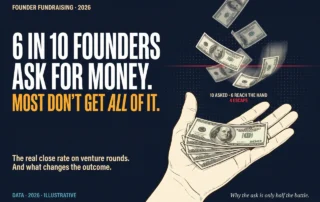
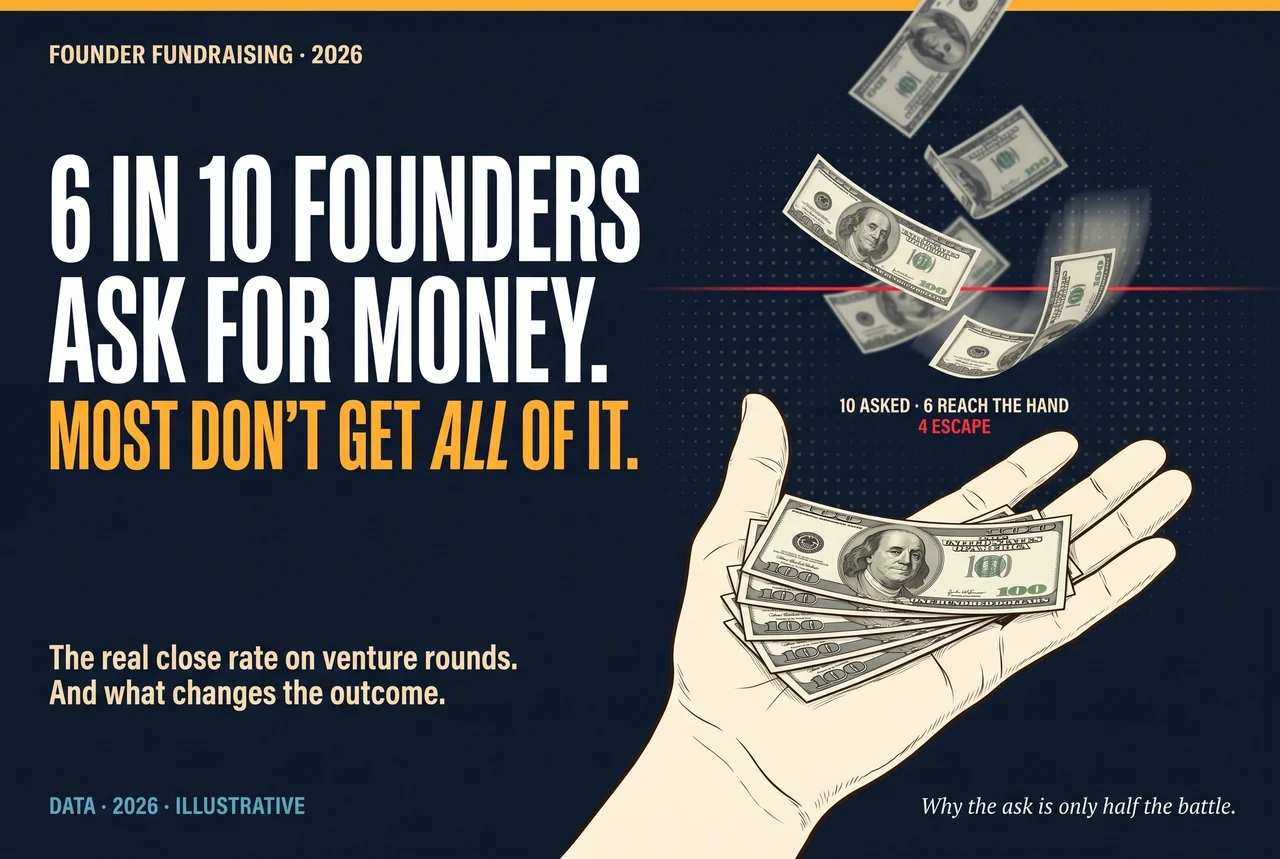
Six in Ten Founders Ask for Money. Most Don’t Get All of It.

2026-08-17T15:17:05-04:00

The Federal Reserve surveyed 6,525 small businesses. Here's exactly where founders win financing, where they get denied, and what the smartest ones do before they ever apply — in six charts.

Six in Ten Founders Ask for Money. Most Don’t Get All of It.2026-08-17T15:17:05-04:00
2 Aug, 2026

Can One Person Make a Million Dollars? The Honest Math (2026)

2026-08-17T15:17:56-04:00
Can one person really make a million dollars — the honest math behind the one-person business in 2026
★ The Lonely Entrepreneur · The One-Person Million Reality Check 2026

Can One Person Really Make a Million Dollars?

The headlines say yes — 117,000 people did it last year alone. But the average solopreneur earns $39,273, only 3.6% ever clear a million, and 68% have less than six months of savings. So is the one-person million-dollar business a genuine path or a beautiful lie? Here's the honest math — the real income, the real odds, and the real cost — in six charts.

Every few months a new headline goes viral: someone built a business to a million dollars a year, entirely alone, working from a laptop on a beach. The number gets screenshotted, the dream gets sold, and thousands of people quietly decide this is either their destiny or a con. The truth, as usual, lives in neither camp. It lives in the data — and the data is more interesting, and more useful, than either the hype or the cynicism.

We've already covered the rise of the million-dollar one-person business and the AI stack that makes it mechanically possible. This piece does something different and, frankly, more honest: it runs the actual math on whether you — a specific person with a specific tolerance for risk, income, and loneliness — should try. Because the same statistics that make solopreneurship look like freedom also reveal the price tag underneath it. And that price is rarely on the highlight reel.

The one-person million-dollar business is real. So is the fact that only 3.6% of solopreneurs ever get there — and most who don't aren't even trying to.

The million-dollar month, broken down.

A million a year isn't one big number — it's a monthly, weekly, daily target. Seeing it broken down changes how the goal feels. Hover each unit.

Chart 1 — The real math
What "$1M a year" actually requires
Working backwards from a million in revenue. Hover a tile.

Math: $1,000,000 / year = $83,333 / month = ~$19,230 / week = ~$3,846 / working day (260 days). The point isn't to intimidate — it's to convert an abstract dream into a concrete, testable daily number you can actually build a model around.

Start with the arithmetic, because the arithmetic is where fantasy meets reality. A million dollars in annual revenue is $83,333 every month, roughly $19,230 every week, and about $3,846 for every working day of the year. Written out like that, the goal stops being a vibe and becomes a spreadsheet. And here's why that reframe matters: some businesses can hit $3,846 a day and some structurally can't, no matter how hard the founder works. If you sell a $50 product, you need 77 sales a day, every day — a volume machine. If you sell a $10,000 service, you need one client roughly every two and a half working days — a completely different business, with completely different constraints. The million-dollar solo business isn't one thing; it's whatever business model can produce that daily number with one person's hands on it. The first honest question isn't "can I make a million?" It's "does my model even have a mathematical path to $3,846 a day?"

Where you'd actually land.

The million-dollar tier gets the headlines. The real distribution of solopreneur income tells a very different story. Tap any slice.

Chart 2 — The odds, honestly
Solopreneur income distribution
Share of solopreneurs by annual earnings. Tap a segment.

Sources: QuickBooks / Comparably / Leapmesh (2026). Average solopreneur income: $39,273. 36% earn under $25K/year. Only 3.6% earn more than $1M. The million-dollar tier is real — but it's the far tail of the curve, not the middle.

Now the part the highlight reel skips. The average solopreneur in America earns $39,273 a year — less than a median salary at a regular job. More than a third, some 36%, make under $25,000 from their business. And the million-dollar club? It's 3.6% of solopreneurs. Not 36%, not even a rounding error away from it — three-point-six percent. If you're going to attempt this, you have to hold two truths at once: the ceiling is genuinely a million-plus, and the floor is genuinely below a living wage. Most people who go solo aren't failing to reach a million; they never aimed there. Nearly half say flexibility and steady income are the goal, and just 41% even rely on the business as their primary income. So before you measure yourself against the 3.6%, get honest about which curve you actually want to be on. Aiming for the tail is a legitimate choice — but it's a different sport than aiming for freedom, and confusing the two is how people burn out chasing a number they never truly wanted.

The average business-of-one earns $39,273. The million-dollar version isn't the norm — it's the exception that got a headline.

The numbers nobody puts on the highlight reel.

Freedom has a price, and the data measures it precisely. These are the figures that decide whether solo is right for you. They count up as you scroll.

Chart 3 — The fine print
The real cost of going solo
Selected indicators

Sources: QuickBooks, Simply Business, Gusto (2026): 77% profitable in year one, but 68% hold less than 6 months of savings, 48% have gone a month+ with no income, 35% report high stress (vs. 26% of owners with employees), 34% have considered quitting, and the "success" income gap is $219K needed vs. $39K earned.

Here's the fine print, and it deserves to be read out loud. The good news first: 77% of solopreneurs are profitable in their first year, an astonishingly high rate that low overhead makes possible — no payroll, no office, no burn. But profitability isn't the same as security. Sixty-eight percent of solopreneurs have less than six months of savings, and 48% — nearly half — have gone at least a full month with no income at all. There's a psychological bill too: 35% report high stress, notably higher than the 26% among business owners who have employees, and 34% have considered giving up entirely, with inconsistent income cited by 72% of those who've thought about quitting. Perhaps the most revealing number is the aspiration gap: solopreneurs say they'd need to earn $219,000 a year to feel successful, while the average actually earns $39,273. That's not a small shortfall; it's a chasm between the life imagined and the life lived. None of this means don't do it. It means do it with your eyes open, and build a financial and emotional buffer before you need one.

The lever that beats hustle: margin.

You don't reach a million by working harder — you reach it by choosing a business with the right margin. The model matters more than the effort. Hover a bar.

Chart 4 — The margin game
Why the business model decides the ceiling
Approximate net margin by solo business type. Hover a bar.

Sources: SoFi / industry data (2026): sole-proprietor margins averaged ~31%, ranging 14–52% by industry; digital/knowledge models can exceed 70%. The higher your margin, the less revenue you need to keep the same take-home — which is why model choice beats raw hustle.

If there's one insight that separates the 3.6% from everyone grinding below them, it's this: they picked a business with the right margin before they picked a work ethic. Margin is the quiet lever nobody posts about. A sole proprietor's net margin averages around 31%, but it swings wildly by industry — from as low as 14% to as high as 52% — and the best digital and knowledge businesses can clear 70% or more. That difference is everything for a solo operator, because margin decides how much revenue you need to generate to keep a given amount. At a 15% margin, a million in revenue leaves you $150,000 before taxes and a mountain of work; at a 70% margin, that same million leaves $700,000, and often with far less operational drag. Two founders can work identical hours and end up with radically different lives purely because one chose a high-margin model. This is why the seasoned advice is always some version of "sell knowledge, software, or productized expertise, not your hours or a thin-margin physical product" — not because the low-margin paths can't work, but because they force one person to move enormous volume to reach the same finish line.

Two solo founders can work the same hours and earn wildly different money. The difference isn't effort — it's the margin they chose on day one.

The five walls you'll hit — in order.

Solo businesses fail in predictable places. Knowing the sequence lets you prepare for the next wall before you hit it. Tap each stage.

Chart 5 — The gauntlet
Where solo founders actually get stuck
The five recurring failure points, in the order they arrive. Tap a wall.

Sources: Gusto / Simply Business (2026): 41% name time management as the biggest challenge, 34% marketing/customer acquisition, 29% cash flow, and over 60% underestimated running every function alone. The 10-year failure rate for new businesses overall is ~65% — sequence-awareness is a real edge.

Solo businesses don't fail randomly — they fail at predictable walls, and the walls arrive in roughly the same order for almost everyone. The first is time management: 41% of solopreneurs name it their single biggest challenge, because when you're the whole company, every function competes for the same finite hours. The second wall is marketing and customer acquisition, cited by 34% — building the thing turns out to be easier than getting anyone to notice it. Third comes cash flow, the challenge for 29%, where the feast-and-famine rhythm of solo income collides with fixed monthly bills. The fourth wall is the quiet one: isolation. It doesn't show up on a P&L, but working alone erodes judgment, motivation, and mental health in ways that eventually hit the numbers. And the fifth wall is the growth ceiling — the point where one person simply runs out of hours and has to choose between plateauing, automating, or bringing in help. Over 60% of solopreneurs admit they underestimated how hard it would be to handle every function alone. Knowing the sequence in advance won't make the walls disappear, but it turns each one from an ambush into a scheduled appointment you can prepare for.

Should you actually do this?

The honest answer depends on what you're optimizing for. Move the slider across the trade-offs and see where you land. Tap each point.

Chart 6 — The decision
The solo trade-off spectrum
From maximum freedom to maximum income — you can't fully max both. Tap a point.
Tap any point to see the trade-off. The pattern The Lonely Entrepreneur keeps returning to: there's no wrong answer here — only an unexamined one. Decide which curve you're on before you measure yourself against the other.

Synthesized from 2026 solopreneur data: 47% prioritize flexibility + steady income; only a minority chase seven figures. The million-dollar solo business sits at the high-income, lower-freedom end — real, but a genuine trade, not a free lunch.

So — should you do it? The honest answer is a question back: what are you actually optimizing for? Solopreneurship isn't a single destination; it's a spectrum with a real trade-off running through the middle. At one end sits maximum freedom — modest, steady income, total control of your time, low stress, the life 47% of solopreneurs explicitly say they want. At the other end sits maximum income — the seven-figure solo business that is real but demands relentless focus, high-margin model discipline, and a tolerance for the isolation and cash-flow whiplash that come with the territory. You cannot fully maximize both at once; every step toward the million-dollar end costs you something at the freedom end, and vice versa. The founders who are happiest aren't the ones who picked the "right" end — they're the ones who picked consciously, matched the choice to their temperament and their financial runway, and stopped measuring their freedom-optimized life against someone else's income-optimized highlight reel. The worst outcome isn't landing at $39,000 or at $1,000,000. It's spending three years sprinting toward a number you never actually wanted, alone, and calling the exhaustion failure.

There's no wrong end of the spectrum. There's only the mistake of chasing one end while secretly wanting the other.

What you should actually do before you start

If you're seriously considering the one-person path, run the math first: convert your million-dollar dream into a daily revenue number and ask honestly whether your business model can even produce it with one person's hands. Choose margin over hustle — favor knowledge, software, or productized expertise over hour-selling and thin-margin physical goods, because model choice sets your ceiling before effort ever enters the picture. Build a runway before you leap: aim to beat the 68% who have under six months of savings, because inconsistent income isn't a risk, it's a near-certainty. Prepare for the five walls in order — time, marketing, cash flow, isolation, and the growth ceiling — so each becomes an appointment rather than an ambush. And decide which end of the freedom-income spectrum you actually want, then commit to it without comparing your chosen life to the other one's highlight reel. Above all, don't confuse "alone in the work" with "alone in the journey" — the isolation is the wall that quietly takes down the most capable founders.

The bottom line

Can one person really make a million dollars? Yes — 117,000 Americans did it in a single year, and AI has only widened the door since. But the same data that makes it possible makes it honest: only 3.6% of solopreneurs get there, the average earns $39,273, most run on razor-thin savings, and a third have thought about quitting. The million-dollar solo business is neither a myth nor a lottery ticket. It's a specific, achievable outcome for people who pick the right model, build a real runway, prepare for the predictable walls, and — crucially — don't try to do the emotional part alone. Freedom and a fortune are both on the table. What the numbers quietly insist is that you can't have all of both, and that the founders who thrive are the ones who chose on purpose, with people in their corner who'd already walked the road.

A million dollars alone is possible. A million dollars and a life you'd want is only possible if you don't do it entirely by yourself.

Don't run the numbers alone.

The math is learnable, the model is choosable, the walls are predictable — but the isolation is the one variable you can't solve with a spreadsheet. That's what The Lonely Entrepreneur is for.

Join the Learning Community

250,000+ founders — including solo operators at every income level — pressure-testing their models, their margins, and their sanity together.

Find your people →

Work with Sidekick

A partner to help you run the real math, pick the high-margin model, and build the runway before you leap — not after you're stuck.

Get a Sidekick →

Keep reading

Frequently asked questions

'+d.lab+'
'; return '
'+(d.pre||'')+'0'+d.suf+'
'+d.lab+'
'; }).join(''); var nums=box.querySelectorAll('.num[data-i]'); reveal('rC3',function(){ nums.forEach(function(n){ var d=data[+n.getAttribute('data-i')],t0=null,dur=1300; function step(ts){if(!t0)t0=ts;var pr=Math.min((ts-t0)/dur,1);n.textContent=(d.pre||'')+Math.round(pr*d.v)+d.suf;if(pr<1)requestAnimationFrame(step);} requestAnimationFrame(step); }); }); })(); /* CHART 4: MARGIN BARS */ (function(){ var svg=root.querySelector('#r4svg'),tip=root.querySelector('#r4tip'); var W=640,H=350,xL=55,yB=280,yT=30; var bars=[ {n:'Digital / knowledge',v:70,note:'~70%+ margin. Courses, software, productized expertise. A million in revenue can leave ~$700K \u2014 the model the 3.6% tend to pick.'}, {n:'Consulting',v:52,note:'~52% margin (high end). Selling expertise directly. High margin, but capped by your hours \u2014 unless you productize it.'}, {n:'Services (avg)',v:31,note:'~31% margin. The sole-proprietor average. Solid, but you need to move real volume to reach seven figures solo.'}, {n:'Physical / e-comm',v:14,note:'~14% margin (low end). A million in revenue can leave ~$140K before taxes \u2014 and a huge operational load for one person.'} ]; var n=bars.length,slotW=(600-xL)/n,maxV=78; svg.appendChild(el('line',{x1:xL,y1:yB,x2:600,y2:yB,stroke:'rgba(255,255,255,.15)','stroke-width':1.5})); [20,40,60].forEach(function(g){var y=yB-(yB-yT)*(g/maxV);svg.appendChild(el('line',{x1:xL,y1:y,x2:600,y2:y,stroke:'rgba(255,255,255,.06)','stroke-width':1}));svg.appendChild(el('text',{x:xL-6,y:y+4,fill:'#a9b6d6','font-size':9.5,'text-anchor':'end'})).textContent=g+'%';}); bars.forEach(function(b,i){ var x=xL+slotW*i+slotW*0.14,bw=slotW*0.62,fh=(yB-yT)*(b.v/maxV); var col=['#f75008','#f7a008','#3fd08a','#5b8def'][i]; var bar=el('rect',{x:x,y:yB,width:bw,height:0,rx:6,fill:col,opacity:.92,style:'cursor:pointer'});svg.appendChild(bar); var vl=el('text',{x:x+bw/2,y:yB,fill:'#fff','font-size':14,'font-weight':900,'text-anchor':'middle',opacity:0});vl.textContent='~'+b.v+'%';svg.appendChild(vl); var words=b.n.split(' '),l1=words.slice(0,Math.ceil(words.length/2)).join(' '),l2=words.slice(Math.ceil(words.length/2)).join(' '); var t1=el('text',{x:x+bw/2,y:yB+16,fill:'#a9b6d6','font-size':9.5,'text-anchor':'middle'});t1.textContent=l1;svg.appendChild(t1); if(l2){var t2=el('text',{x:x+bw/2,y:yB+28,fill:'#a9b6d6','font-size':9.5,'text-anchor':'middle'});t2.textContent=l2;svg.appendChild(t2);} function show(){tip.innerHTML=b.note;tip.style.left=((x+bw/2)/W*100)+'%';tip.style.top=((yB-fh-12)/H*100)+'%';tip.style.opacity=1;tip.style.whiteSpace='normal';tip.style.maxWidth='240px';} bar.addEventListener('mouseenter',show);bar.addEventListener('mousemove',show); bar.addEventListener('mouseleave',function(){tip.style.opacity=0;}); bar.addEventListener('touchstart',function(e){e.preventDefault();show();},{passive:false}); b._bar=bar;b._vl=vl;b._fh=fh; }); svg.appendChild(el('text',{x:(xL+600)/2,y:yT-4,fill:'#a9b6d6','font-size':11,'font-weight':700,'text-anchor':'middle'})).textContent='Net margin \u2014 higher = less revenue needed for the same take-home'; reveal('rC4',function(){ bars.forEach(function(b,i){setTimeout(function(){ b._bar.style.transition='height .8s cubic-bezier(.2,.7,.2,1),y .8s cubic-bezier(.2,.7,.2,1)'; b._bar.setAttribute('height',b._fh);b._bar.setAttribute('y',yB-b._fh); b._vl.style.transition='opacity .4s .3s';b._vl.setAttribute('y',yB-b._fh-8);b._vl.setAttribute('opacity',1); },i*150);}); }); })(); /* CHART 5: THE FIVE WALLS — sequential path with rising walls */ (function(){ var svg=root.querySelector('#r5svg'),tip=root.querySelector('#r5tip'); var W=640,H=320,xL=40,yB=250; var walls=[ {n:'Time',pct:'41%',h:0.5,note:'Wall 1 \u2014 Time. 41% name time management their #1 challenge. You\u2019re every department, competing for the same hours.'}, {n:'Marketing',pct:'34%',h:0.62,note:'Wall 2 \u2014 Marketing. 34% cite customer acquisition. Building it is easier than getting anyone to notice it.'}, {n:'Cash flow',pct:'29%',h:0.74,note:'Wall 3 \u2014 Cash flow. 29% struggle here. Feast-and-famine income meets fixed monthly bills.'}, {n:'Isolation',pct:'\u2014',h:0.86,note:'Wall 4 \u2014 Isolation. The quiet one. Never on a P&L, but working alone erodes judgment and motivation \u2014 and eventually the numbers.'}, {n:'Growth ceiling',pct:'',h:1.0,note:'Wall 5 \u2014 The ceiling. One person runs out of hours. Plateau, automate, or bring in help \u2014 the fork the whole solo model bends toward.'} ]; var n=walls.length,gap=(W-xL-30)/n; // ground line svg.appendChild(el('line',{x1:xL,y1:yB,x2:W-20,y2:yB,stroke:'rgba(255,255,255,.15)','stroke-width':1.5})); walls.forEach(function(w,i){ var x=xL+gap*i+gap*0.2,bw=gap*0.5,fh=(yB-40)*w.h; var col=i===n-1?'#f75008':(i===3?'#f7a008':'#5b8def'); var bar=el('rect',{x:x,y:yB,width:bw,height:0,rx:4,fill:col,opacity:0,style:'cursor:pointer'});svg.appendChild(bar); var num=el('text',{x:x+bw/2,y:yB-fh-8,fill:'#fff','font-size':13,'font-weight':900,'text-anchor':'middle',opacity:0});num.textContent=(i+1);svg.appendChild(num); var nm=el('text',{x:x+bw/2,y:yB+16,fill:'#eaf0ff','font-size':10,'font-weight':700,'text-anchor':'middle'});nm.textContent=w.n;svg.appendChild(nm); if(w.pct&&w.pct!=='\u2014'&&w.pct!==''){var pc=el('text',{x:x+bw/2,y:yB+28,fill:'#f7a008','font-size':9.5,'font-weight':800,'text-anchor':'middle'});pc.textContent=w.pct;svg.appendChild(pc);} function show(){tip.innerHTML=w.note;tip.style.left=((x+bw/2)/W*100)+'%';tip.style.top=((yB-fh-14)/H*100)+'%';tip.style.opacity=1;tip.style.whiteSpace='normal';tip.style.maxWidth='230px';} bar.addEventListener('mouseenter',show);bar.addEventListener('mousemove',show); bar.addEventListener('mouseleave',function(){tip.style.opacity=0;}); bar.addEventListener('touchstart',function(e){e.preventDefault();show();},{passive:false}); w._bar=bar;w._num=num;w._fh=fh; }); svg.appendChild(el('text',{x:xL,y:22,fill:'#a9b6d6','font-size':11,'font-weight':700})).textContent='The walls arrive in order \u2014 each taller than the last'; reveal('rC5',function(){ walls.forEach(function(w,i){setTimeout(function(){ w._bar.style.transition='height .7s cubic-bezier(.2,.7,.2,1),y .7s cubic-bezier(.2,.7,.2,1),opacity .4s'; w._bar.setAttribute('opacity',.92);w._bar.setAttribute('height',w._fh);w._bar.setAttribute('y',yB-w._fh); w._num.style.transition='opacity .4s .3s';w._num.setAttribute('opacity',1); },i*170);}); }); })(); /* CHART 6: FREEDOM-INCOME SPECTRUM */ (function(){ var svg=root.querySelector('#r6svg'),tip=root.querySelector('#r6tip'),note=root.querySelector('#r6note'); var W=640,H=300,y=140,xL=60,xR=580; // gradient track var defs=el('defs',{});var lg=el('linearGradient',{id:'r6grad',x1:'0',y1:'0',x2:'1',y2:'0'}); [['0','#3fd08a'],['0.5','#f7a008'],['1','#f75008']].forEach(function(s){lg.appendChild(el('stop',{offset:s[0],'stop-color':s[1]}));}); defs.appendChild(lg);svg.appendChild(defs); svg.appendChild(el('line',{x1:xL,y1:y,x2:xR,y2:y,stroke:'url(#r6grad)','stroke-width':8,'stroke-linecap':'round',opacity:0,id:'r6track'})); var track=svg.querySelector('#r6track'); var pts=[ {n:'Max freedom',sub:'~$25\u201350K \u00b7 low stress',note:'Freedom end. Modest, steady income, total time control, low stress. The life 47% of solopreneurs explicitly say they want. Not a failure \u2014 a choice.'}, {n:'Balanced',sub:'~$100K \u00b7 sustainable',note:'The middle. A real income with real autonomy. High-margin model + light automation. Sustainable for most temperaments.'}, {n:'Growth mode',sub:'$250K\u2013$1M \u00b7 high focus',note:'Pushing up. Serious income, rising demands. Requires margin discipline, systems, and tolerance for cash-flow swings.'}, {n:'Max income',sub:'$1M+ \u00b7 the 3.6%',note:'Income end. The seven-figure solo business. Real, but demands relentless focus and a high tolerance for isolation. You trade freedom for the number.'} ]; var n=pts.length; function X(i){return xL+(xR-xL)*i/(n-1);} pts.forEach(function(p,i){ var c=el('circle',{cx:X(i),cy:y,r:12,fill:'#0f1a3a',stroke:'#fff','stroke-width':2.5,style:'cursor:pointer',opacity:0});svg.appendChild(c); var num=el('text',{x:X(i),y:y+4,fill:'#fff','font-size':11,'font-weight':900,'text-anchor':'middle',opacity:0,style:'pointer-events:none'});num.textContent=(i+1);svg.appendChild(num); var lab=el('text',{x:X(i),y:i%2?y+40:y-28,fill:'#fff','font-size':11,'font-weight':800,'text-anchor':'middle',opacity:0});lab.textContent=p.n;svg.appendChild(lab); var sub=el('text',{x:X(i),y:i%2?y+54:y-14,fill:'#a9b6d6','font-size':9.5,'text-anchor':'middle',opacity:0});sub.textContent=p.sub;svg.appendChild(sub); function pick(){note.innerHTML=p.note;tip.style.opacity=0;} [c,num,lab,sub].forEach(function(nn){nn.addEventListener('click',pick);nn.addEventListener('mouseenter',pick); nn.addEventListener('touchstart',function(e){e.preventDefault();pick();},{passive:false});}); p._els=[c,num,lab,sub]; }); svg.appendChild(el('text',{x:xL,y:y-64,fill:'#3fd08a','font-size':11,'font-weight':800})).textContent='FREEDOM'; svg.appendChild(el('text',{x:xR,y:y-64,fill:'#f75008','font-size':11,'font-weight':800,'text-anchor':'end'})).textContent='INCOME'; reveal('rC6',function(){ track.style.transition='opacity .8s';track.setAttribute('opacity',1); pts.forEach(function(p,i){setTimeout(function(){p._els.forEach(function(e){e.style.transition='opacity .5s';e.setAttribute('opacity',1);});},i*160);}); }); })(); /* RELATED + FAQ */ root.querySelector('#relatedGrid').innerHTML=[ {k:'Trending',t:'The Million-Dollar One-Person Business',d:'The full data story on the 117,060 solo firms that crossed $1M.',u:'https://lonelyentrepreneur.com/million-dollar-one-person-business/'}, {k:'How-to',t:'Million-Dollar Companies With One Employee',d:'The AI stack and mechanics that make a solo seven figures possible.',u:'https://lonelyentrepreneur.com/million-dollar-companies-with-one-employee/'}, {k:'Scale',t:'The Founder Bottleneck',d:'What happens when one person becomes the ceiling on growth.',u:'https://lonelyentrepreneur.com/founder-bottleneck-2026/'}, {k:'Leadership',t:'The Loneliness Epidemic at the Top',d:'The isolation wall \u2014 the one a spreadsheet can\u2019t solve.',u:'https://lonelyentrepreneur.com/leadership-loneliness-epidemic-2026/'} ].map(function(r){return ''+r.k+'

'+r.t+'

'+r.d+'

';}).join(''); root.querySelector('#tFaq').innerHTML=[ ['Can one person really make a million dollars?','Yes \u2014 in 2023 the U.S. Census counted 117,060 one-person businesses grossing $1 million or more. But it\u2019s rare: only about 3.6% of solopreneurs earn over $1M, the average earns $39,273, and reaching seven figures alone requires $83,333 in revenue every month. It\u2019s achievable, but it\u2019s the far tail of the distribution, not the norm.'], ['What does a solopreneur actually earn on average?','The average U.S. solopreneur earns $39,273 a year, and 36% make under $25,000 from their business. Notably, solopreneurs say they\u2019d need to earn about $219,000 to feel successful \u2014 a large gap between expectation and reality. Only 41% rely on the business as their primary income; for many, it\u2019s a flexibility-first choice rather than a wealth play.'], ['Is a one-person business worth it?','It depends what you\u2019re optimizing for. 77% are profitable in year one and startup costs are low, but 68% have under six months of savings, 48% have gone a month without income, and 35% report high stress \u2014 higher than owners with employees. It\u2019s worth it if you value autonomy and choose your model and runway carefully; it\u2019s painful if you chase a seven-figure number you don\u2019t truly want.'], ['What business model is best for a solo million?','High-margin, low-overhead models. Sole-proprietor margins average ~31% but range 14\u201352% by industry, while digital and knowledge products (courses, software, productized expertise) can exceed 70%. Higher margin means you need far less revenue for the same take-home \u2014 which is why model choice matters more than raw effort for reaching seven figures alone.'], ['Why do most one-person businesses stall?','They hit predictable walls in order: time management (41% call it their #1 challenge), marketing and customer acquisition (34%), cash flow (29%), isolation, and finally the growth ceiling where one person runs out of hours. Over 60% admit they underestimated running every function alone. Knowing the sequence \u2014 and building support for the isolation wall especially \u2014 is a genuine edge.'] ].map(function(f){return '
'+f[0]+'

'+f[1]+'

';}).join(''); })();

Can One Person Make a Million Dollars? The Honest Math (2026)2026-08-17T15:17:56-04:00
2 Aug, 2026

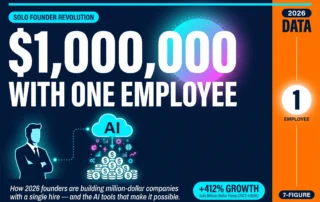
The Rise of Million Dollar Companies With One Employee (2026)

2026-08-17T15:18:02-04:00
The rise of million-dollar companies with just one employee — 117,060 solo firms crossed $1M in 2026
★ The Lonely Entrepreneur · The One-Person Million-Dollar Company 2026

The Rise of Million-Dollar Companies With Just One Employee

It used to be that "building a company" meant hiring people, renting an office, and running a payroll. Not anymore. In 2023 the U.S. Census counted 117,060 businesses with zero employees that grossed $1 million or more — and in 2026, AI has poured gasoline on the trend. The million-dollar solo company is no longer a myth or a lottery. It's a category. Here's how it happened, and what it actually takes, in six charts.

For most of the industrial era, the word "company" meant "a group of people." If you wanted to build something that mattered, you needed employees, an office, a hierarchy, and someone to run the payroll for all of it. That assumption is now crumbling faster than almost anyone predicted. There are 29.8 million solopreneurs in the United States generating roughly $1.7 trillion in revenue — about 6.8% of total economic output — and a growing sliver of them have done something that would have sounded absurd a decade ago: crossed a million dollars in annual revenue without hiring a single person.

The number that anchors this whole story is a Census figure, not a guru's slide. In 2023, exactly 117,060 nonemployer businesses grossed a million dollars or more. That's out of 30.4 million nonemployer firms bringing in nearly $1.8 trillion in receipts. It's a tiny fraction — but it's real, it's counted, and it roughly doubled in a single year. If you've quietly decided the one-person million-dollar business is either a lie or a jackpot you'll never hit, both of those beliefs are wrong — and, as we'll see, they're wrong in a way that's expensive.

The fastest-growing company in America may no longer be a company at all. It's one person, and a stack of software that behaves like a team.

The steady climb of the business-of-one.

Nonemployer firms have grown almost every year for two decades. The line is not a blip — it's a structural shift in how value gets created. Hover the chart.

Chart 1 — The solo boom
Nonemployer businesses in the U.S.
Total firms with zero employees, by year (millions). Hover a point.

Source: U.S. Census Bureau, Nonemployer Statistics (NES). Establishments rose from ~24M in 2015 to 30,427,808 in 2023 — up from 29,811,495 in 2022 — bringing in nearly $1.8 trillion (6.4% of economic activity). From 2000–2019 alone the count jumped 65%.

Look at the shape of that line, because the shape is the argument. This isn't a pandemic-era spike that reverted; it's a two-decade climb that keeps going. From 2000 to 2019, the number of nonemployer businesses in America grew 65%, from 16 million to nearly 27 million. Then it kept rising — past 29.8 million in 2022 and over 30.4 million in 2023. What changed isn't that people suddenly got braver. It's that the cost of "being a company" collapsed toward zero. Cloud tools replaced IT departments, marketplaces replaced storefronts, and payment rails replaced accounting teams. Each of those removed a reason you used to need employees. The result is a permanent, structural rise in the number of Americans running a business entirely on their own — and a small but fast-growing group turning that into serious money.

The million-dollar tier is tiny — and that's the point.

Most solo businesses never clear $50K. The million-dollar club is rare, which is exactly why it's worth understanding. Tap any band.

Chart 2 — The revenue pyramid
Where solo businesses actually land
Nonemployer firms by revenue band. Tap a tier.

Sources: Census Nonemployer Statistics (117,060 firms at $1M+ in 2023; average nonemployer revenue ~$58K); industry analysis (roughly three-quarters of solo firms never clear $50K/year). The million-dollar tier is ~0.4% of all nonemployers — rare, but real and rising.

Here's the honest context most breathless headlines skip. The 117,060 figure is inspiring precisely because it's small. Roughly three-quarters of solo businesses in America never clear $50,000 a year in revenue, and the average nonemployer firm brings in about $58,000. So the million-dollar tier isn't the norm — it's the top of a very steep pyramid, somewhere around four-tenths of one percent of all nonemployer firms. That matters for two reasons. First, it means anyone selling you a one-person million-dollar business as a guaranteed, plug-and-play outcome is lying to you. Second — and more usefully — it means the people who get there are doing something structurally different from the crowd below them, and that difference is learnable. The goal of studying this tier isn't to feel inspired for an afternoon and change nothing by Tuesday. It's to reverse-engineer what actually separates the 0.4% from the 99.6%.

Chase the million-dollar headline and you'll quit at month nine. Study the numbers underneath it, and you'll build something that lasts.

What's driving the 2026 acceleration.

The solo boom is old. The million-dollar solo boom is new — and it runs on a few specific numbers. They count up as you scroll.

Chart 3 — The engine
The 2026 numbers behind the surge
Selected indicators

Sources: Census NES; Futurist Thomas Frey / industry data (2026): 74% AI adoption among solopreneurs, AI returns 10–40% of the workday, 30% of 2024 startups were solo-led (up from 23.7% in 2019) and captured 14.7% of priced equity rounds, 94% of solopreneurs project growth, rural solo growth ~2.5× urban.

The steady 20-year climb explains the millions of solo firms. It doesn't explain why the million-dollar tier suddenly doubled. That acceleration has a specific cause, and it arrived around 2023: AI became the world's cheapest employee. A solo founder in 2026 can hand customer service, marketing copy, sales-funnel management, code, and financial analysis to software that costs a subscription instead of a salary. AI adoption among solopreneurs has reached 74%, and that automation now returns somewhere between 10 and 40% of a founder's daily working time — one to four hours a day back in your pocket. One creator profiled in recent coverage used an AI writing tool to go from four blog posts a month to twenty, saving roughly $4,800 a month versus paying a freelancer. That's not an efficiency tweak; that's an entire department replaced by a $20 tool. Add "vibe coding" erasing the technical barrier and a growing pool of capital — solo-led firms were 30% of 2024 startups and captured 14.7% of priced equity rounds — and you get the conditions for a genuinely new category: the one-person company that scales like a funded team.

Where the one-person millionaires are building.

The solo wave isn't hitting every sector equally. A handful of industries account for most of it. Hover a bar.

Chart 4 — The industry mix
Top sectors for solo businesses
Approximate share of solopreneurs by industry. Hover a bar.

Source: industry analysis of solopreneur sectors (2026). Professional services ~30%, e-commerce & creative ~25%, consulting & tech ~20%. Content/media fell first to AI; software and SaaS are seeing the most dramatic "build-it-yourself" shift; services and consulting are being unbundled from firms.

The million-dollar solo company clusters in a few specific places, and the pattern tells you where the model works best. Professional services lead at roughly 30% of solopreneurs, followed by e-commerce and creative work at around 25%, and consulting and tech at about 20%. Content and media were the first dominoes to fall — a single creator with AI-assisted editing, scriptwriting, and design can now run what used to require a small studio. Software and SaaS are seeing the most dramatic shift of all: the classic playbook of raising money, hiring engineers, and building for two years is being replaced by "build it yourself this weekend, launch Monday, iterate on real users." Professional services and consulting are being quietly unbundled — accountants, marketers, designers, and analysts who once had to join a firm to access tools and clients can now operate alone, letting AI absorb the administrative overhead. And notably, this isn't a coastal phenomenon: rural areas are seeing solopreneur growth at roughly 2.5 times the rate of urban centers, because location stopped mattering the moment the whole business fit inside a laptop.

The next generation of founders won't build teams first. They'll build systems, automate relentlessly, and let software be the org chart.

The AI stack that replaces a payroll.

A one-person millionaire doesn't have no staff — they have a stack. Each tool covers a function a person used to. Tap any layer.

Chart 5 — The synthetic team
What the "staff" actually is
Each layer replaces a role — for a subscription, not a salary. Tap a layer.

Framework synthesized from 2026 solopreneur coverage (Futurist Thomas Frey; solo tech-stack guides). The principle: pick a small set of tools that cover your core functions and make sure they talk to each other. This is your staff — hire it carefully, and build the stack before the product.

It's tempting to picture the one-person millionaire as someone doing everything alone. That's the wrong mental model. They don't have no staff — they have a stack, and the stack behaves like a team. Think of it in layers, each one absorbing a role a company used to pay a person for. A content layer drafts, edits, and repurposes what a writer and designer once produced. A customer layer handles support, onboarding, and follow-up that used to need a service rep. A build layer — increasingly "vibe coding" tools — ships product that once required a developer or a technical co-founder. An operations layer runs scheduling, project management, and the glue work an ops person handled. And a finance layer manages bookkeeping, invoicing, and analysis that used to mean an accountant. The founders who reach a million dollars treat assembling this stack as their first and most important hire. The advice that keeps surfacing is counterintuitive but consistent: build your AI stack before you build your product, pick tools that integrate rather than a pile of disconnected apps, and automate before you scale — not after.

From launch to a million, without a single hire.

The path to a one-person million-dollar business is a sequence, not a leap. Each stage is a systems-design move. Tap each stage.

Chart 6 — The solo path
The road to a business-of-one million
Five moves that separate the 0.4% from the crowd. Tap each stage.
Tap any stage to see the move in practice. The pattern The Lonely Entrepreneur keeps returning to: a one-person company still needs a support system of people — you automate the work, not the loneliness.

Synthesized from 2026 solopreneur playbooks: tight niche over big idea, stack before product, automate before scale, volume over perfection early, protect your time like it's your only employee — because it is. Second "hire" is a 1099 contractor, not an employee.

The road to a million dollars alone is a sequence of deliberate moves, and it looks less like a leap of faith than a systems-design problem. It starts with a tight niche, not a big idea — the solopreneurs winning right now aren't trying to build the next Amazon; they're solving one painful, specific problem for one specific group, because narrow focus lets a single person punch far above their weight. Next comes the stack: build your synthetic team before you build the product, so operations, content, and support are running before you're overwhelmed. Then automate before you scale, wiring in monthly reviews, testing, and feedback loops from day one, because the habits you set in month one either compound or collapse by month twelve. Early on, choose volume over perfection — ten "good enough" pieces of content beat one perfect one, because visibility creates the feedback you can't get any other way. And protect your time like it's your only employee, because it literally is; the freedom that drew you to the solo path vanishes fast without boundaries. When you finally do need help, the move is usually a contractor, not an employee — preserving the flexibility that made the whole model work.

You can automate the work of ten people. You can't automate having people in your corner — and that's the one thing solo founders skip.

What aspiring solo founders should actually do

If you want to build toward the million-dollar tier, start by respecting the pyramid: the goal isn't to hit the headline, it's to do the structural things the top 0.4% do. Pick a niche narrow enough that a single person can dominate it, then assemble your AI stack — content, customer, build, operations, finance — before you obsess over the product, and make sure those tools actually integrate. Automate your reviews, testing, and feedback loops early, publish with volume rather than perfectionism to generate signal, and guard your calendar ruthlessly, because your time is the only employee you have. Plan your first real "hire" as a 1099 contractor to absorb overflow without surrendering flexibility. And treat the isolation as a real risk, not a badge of honor: the one thing a stack of AI tools can't give you is people who've built what you're building.

The bottom line

The one-person million-dollar business is real — 117,060 of them, counted by the Census — and in 2026 the trend is accelerating because AI collapsed the cost of behaving like a company down to a monthly subscription. But the same data that makes the story inspiring is what keeps it honest: the million-dollar tier is a sliver at the top of a very steep pyramid, and the founders who reach it aren't lucky, they're systematic. They build a stack before a product, automate before they scale, and stay ruthlessly focused. The trap isn't that the dream is fake. The trap is doing it so alone that you burn out at month nine — which is exactly why the smartest solo founders build the one thing software can't replace: a community of people who've already made the climb.

The company of one is the future. The founder of one who has no one is still the oldest mistake in the book.

A company of one still shouldn't be a founder alone.

The million-dollar solo business runs on systems — but the founder still runs on people. The ones who make the climb almost always do it alongside others who've been there. That's what The Lonely Entrepreneur is for.

Join the Learning Community

250,000+ founders — including a fast-growing wave of solo operators — figuring out how to scale without a team, and without going it alone.

Find your people →

Work with Sidekick

A partner to help you design your stack, pick the niche, and build the systems that let one person operate like ten.

Get a Sidekick →

Keep reading

Frequently asked questions

'+d.lab+'
'; return '
'+(d.pre||'')+'0'+d.suf+'
'+d.lab+'
'; }).join(''); var nums=box.querySelectorAll('.num[data-i]'); reveal('sC3',function(){ nums.forEach(function(n){ var d=data[+n.getAttribute('data-i')],t0=null,dur=1400; function fmt(x){return x>=1000?x.toLocaleString():x;} function step(ts){if(!t0)t0=ts;var pr=Math.min((ts-t0)/dur,1);n.textContent=(d.pre||'')+fmt(Math.round(pr*d.v))+d.suf;if(pr<1)requestAnimationFrame(step);} requestAnimationFrame(step); }); }); })(); /* CHART 4: INDUSTRY MIX — bars */ (function(){ var svg=root.querySelector('#s4svg'),tip=root.querySelector('#s4tip'); var W=640,H=350,xL=55,yB=280,yT=30; var bars=[ {n:'Professional services',v:30,note:'~30%. The largest slice. Consultants, marketers, designers, and analysts unbundling from firms \u2014 AI absorbs the admin overhead.'}, {n:'E-commerce & creative',v:25,note:'~25%. AI handles product research, listings, and support; a single creator runs what used to be a small studio.'}, {n:'Consulting & tech',v:20,note:'~20%. Software and SaaS see the most dramatic shift \u2014 "build it yourself this weekend, launch Monday."'}, {n:'Other sectors',v:25,note:'~25%. Everything else \u2014 including rural solo growth running ~2.5\u00d7 the rate of urban centers.'} ]; var n=bars.length,slotW=(600-xL)/n,maxV=32; svg.appendChild(el('line',{x1:xL,y1:yB,x2:600,y2:yB,stroke:'rgba(255,255,255,.15)','stroke-width':1.5})); bars.forEach(function(b,i){ var x=xL+slotW*i+slotW*0.12,bw=slotW*0.68,fh=(yB-yT)*(b.v/maxV); var col=i===0?'#f75008':(i<3?'#f7a008':'#5b8def'); var bar=el('rect',{x:x,y:yB,width:bw,height:0,rx:6,fill:col,opacity:.92,style:'cursor:pointer'});svg.appendChild(bar); var vl=el('text',{x:x+bw/2,y:yB,fill:'#fff','font-size':14,'font-weight':900,'text-anchor':'middle',opacity:0});vl.textContent='~'+b.v+'%';svg.appendChild(vl); // wrap label into two lines var words=b.n.split(' '),line1=words.slice(0,Math.ceil(words.length/2)).join(' '),line2=words.slice(Math.ceil(words.length/2)).join(' '); var t1=el('text',{x:x+bw/2,y:yB+16,fill:'#a9b6d6','font-size':9.5,'text-anchor':'middle'});t1.textContent=line1;svg.appendChild(t1); if(line2){var t2=el('text',{x:x+bw/2,y:yB+28,fill:'#a9b6d6','font-size':9.5,'text-anchor':'middle'});t2.textContent=line2;svg.appendChild(t2);} function show(){tip.innerHTML=b.note;tip.style.left=((x+bw/2)/W*100)+'%';tip.style.top=((yB-fh-12)/H*100)+'%';tip.style.opacity=1;tip.style.whiteSpace='normal';tip.style.maxWidth='230px';} bar.addEventListener('mouseenter',show);bar.addEventListener('mousemove',show); bar.addEventListener('mouseleave',function(){tip.style.opacity=0;}); bar.addEventListener('touchstart',function(e){e.preventDefault();show();},{passive:false}); b._bar=bar;b._vl=vl;b._fh=fh; }); reveal('sC4',function(){ bars.forEach(function(b,i){setTimeout(function(){ b._bar.style.transition='height .8s cubic-bezier(.2,.7,.2,1),y .8s cubic-bezier(.2,.7,.2,1)'; b._bar.setAttribute('height',b._fh);b._bar.setAttribute('y',yB-b._fh); b._vl.style.transition='opacity .4s .3s';b._vl.setAttribute('y',yB-b._fh-8);b._vl.setAttribute('opacity',1); },i*150);}); }); })(); /* CHART 5: SYNTHETIC TEAM STACK */ (function(){ var svg=root.querySelector('#s5svg'),tip=root.querySelector('#s5tip'); var W=640,H=380,xL=120,xR=520,yT=40; var layers=[ {n:'Content layer',role:'replaces a writer + designer',note:'Content. Drafts, edits, and repurposes copy, video, and design \u2014 one founder went from 4 to 20 posts/month, saving ~$4,800.'}, {n:'Customer layer',role:'replaces a support rep',note:'Customer. Handles support, onboarding, and follow-up 24/7 that used to need a service hire.'}, {n:'Build layer',role:'replaces a developer',note:'Build. "Vibe coding" ships product without a technical co-founder \u2014 84% of developers already use AI coding tools.'}, {n:'Operations layer',role:'replaces an ops manager',note:'Operations. Scheduling, project management, and the glue work \u2014 the stuff that used to fall through the cracks.'}, {n:'Finance layer',role:'replaces a bookkeeper',note:'Finance. Invoicing, bookkeeping, and analysis for a subscription instead of an accountant\u2019s salary.'} ]; var n=layers.length,rowH=52,gap=8; layers.forEach(function(ly,i){ var y=yT+i*(rowH+gap),w=xR-xL; var col=['#f75008','#f7a008','#3fd08a','#5b8def','#8a7bef'][i]; var r=el('rect',{x:xL,y:y,width:w,height:rowH,rx:8,fill:'#1a2c5a',stroke:col,'stroke-width':2,opacity:0,style:'cursor:pointer'});svg.appendChild(r); var tag=el('rect',{x:xL,y:y,width:8,height:rowH,rx:0,fill:col,opacity:0});svg.appendChild(tag); var nm=el('text',{x:xL+22,y:y+rowH/2-2,fill:'#fff','font-size':13.5,'font-weight':800,opacity:0});nm.textContent=ly.n;svg.appendChild(nm); var rl=el('text',{x:xL+22,y:y+rowH/2+15,fill:'#a9b6d6','font-size':10.5,opacity:0});rl.textContent=ly.role;svg.appendChild(rl); var badge=el('text',{x:xR-14,y:y+rowH/2+4,fill:col,'font-size':11,'font-weight':800,'text-anchor':'end',opacity:0});badge.textContent='AI';svg.appendChild(badge); function show(){tip.innerHTML=ly.note;tip.style.left='50%';tip.style.top=((y-6)/H*100)+'%';tip.style.opacity=1;tip.style.whiteSpace='normal';tip.style.maxWidth='250px';} [r,nm,rl].forEach(function(nn){nn.addEventListener('mouseenter',show);nn.addEventListener('mousemove',show); nn.addEventListener('mouseleave',function(){tip.style.opacity=0;}); nn.addEventListener('touchstart',function(e){e.preventDefault();show();},{passive:false});}); ly._els=[r,tag,nm,rl,badge]; }); svg.appendChild(el('text',{x:W/2,y:yT-14,fill:'#a9b6d6','font-size':11,'font-weight':700,'text-anchor':'middle'})).textContent='One founder \u00b7 five functions \u00b7 zero salaries'; reveal('sC5',function(){ layers.forEach(function(ly,i){setTimeout(function(){ ly._els.forEach(function(e){e.style.transition='opacity .5s';e.setAttribute('opacity',e.tagName==='rect'&&e.getAttribute('fill')==='#1a2c5a'?1:(e.tagName==='rect'?.9:1));}); },i*150);}); }); })(); /* CHART 6: SOLO PATH TRACK */ (function(){ var svg=root.querySelector('#s6svg'),tip=root.querySelector('#s6tip'),note=root.querySelector('#s6note'); var W=640,H=300,y=130,xL=50,xR=590; svg.appendChild(el('line',{x1:xL,y1:y,x2:xR,y2:y,stroke:'rgba(255,255,255,.18)','stroke-width':4,'stroke-linecap':'round'})); var fill=el('line',{x1:xL,y1:y,x2:xL,y2:y,stroke:'#f75008','stroke-width':4,'stroke-linecap':'round'});svg.appendChild(fill); var stages=[ {n:'Tight niche',note:'Start narrow. Solve one painful problem for one specific group. Narrow focus lets a single person dominate \u2014 don\u2019t chase "the next Amazon."'}, {n:'Build the stack',note:'Stack before product. Assemble your AI "staff" \u2014 content, customer, build, ops, finance \u2014 and make sure the tools integrate.'}, {n:'Automate early',note:'Automate before you scale. Wire in monthly reviews, testing, and feedback from day one. Month-one habits compound or collapse by month twelve.'}, {n:'Volume > perfection',note:'Ship volume. Ten "good enough" pieces beat one perfect one early \u2014 visibility creates the feedback you can\u2019t get any other way.'}, {n:'$1M solo',note:'The tier. Protect your time like your only employee (it is), and make your first "hire" a 1099 contractor \u2014 keeping the flexibility that made it work.'} ]; var n=stages.length; function X(i){return xL+(xR-xL)*i/(n-1);} stages.forEach(function(s,i){ var c=el('circle',{cx:X(i),cy:y,r:11,fill:i===n-1?'#3fd08a':'#1a2c5a',stroke:'#f75008','stroke-width':2.5,style:'cursor:pointer',opacity:0});svg.appendChild(c); var num=el('text',{x:X(i),y:y+4,fill:'#fff','font-size':11,'font-weight':900,'text-anchor':'middle',opacity:0,style:'pointer-events:none'});num.textContent=(i+1);svg.appendChild(num); var lab=el('text',{x:X(i),y:i%2?y+38:y-24,fill:'#eaf0ff','font-size':10.5,'font-weight':700,'text-anchor':'middle',opacity:0});lab.textContent=s.n;svg.appendChild(lab); function pick(){note.innerHTML=s.note;fill.setAttribute('x2',X(i));tip.style.opacity=0;} [c,num,lab].forEach(function(nn){nn.addEventListener('click',pick);nn.addEventListener('mouseenter',pick); nn.addEventListener('touchstart',function(e){e.preventDefault();pick();},{passive:false});}); s._c=c;s._num=num;s._lab=lab; }); svg.appendChild(el('text',{x:xL,y:y-60,fill:'#5b8def','font-size':11,'font-weight':800})).textContent='LAUNCH'; svg.appendChild(el('text',{x:xR,y:y-60,fill:'#3fd08a','font-size':11,'font-weight':800,'text-anchor':'end'})).textContent='$1M SOLO'; reveal('sC6',function(){ stages.forEach(function(s,i){setTimeout(function(){ s._c.style.transition='opacity .5s';s._c.setAttribute('opacity',1); s._num.style.transition='opacity .4s .1s';s._num.setAttribute('opacity',1); s._lab.style.transition='opacity .4s .1s';s._lab.setAttribute('opacity',1); fill.style.transition='x2 .5s ease';fill.setAttribute('x2',X(i)); },i*180);}); }); })(); /* RELATED + FAQ */ root.querySelector('#relatedGrid').innerHTML=[ {k:'Trending',t:'The Million-Dollar One-Person Business',d:'The full data story on the 117,060 solo firms that crossed $1M.',u:'https://lonelyentrepreneur.com/million-dollar-one-person-business/'}, {k:'Scale',t:'The Founder Bottleneck',d:'When you become your company\u2019s ceiling \u2014 the flip side of going solo.',u:'https://lonelyentrepreneur.com/founder-bottleneck-2026/'}, {k:'Time',t:'The Founder Time Trap',d:'Why a one-person company can still own its founder\u2019s calendar.',u:'https://lonelyentrepreneur.com/founder-time-trap-2026/'}, {k:'Leadership',t:'The Loneliness Epidemic at the Top',d:'The one thing an AI stack can\u2019t replace: people in your corner.',u:'https://lonelyentrepreneur.com/leadership-loneliness-epidemic-2026/'} ].map(function(r){return ''+r.k+'

'+r.t+'

'+r.d+'

';}).join(''); root.querySelector('#tFaq').innerHTML=[ ['How many million-dollar one-person businesses are there?','In 2023 the U.S. Census Bureau\u2019s Nonemployer Statistics counted 117,060 businesses with zero employees that grossed $1 million or more \u2014 a figure that roughly doubled in a single year. That\u2019s out of 30.4 million nonemployer firms bringing in nearly $1.8 trillion in receipts, so the million-dollar tier is about 0.4% of all solo businesses.'], ['Is a one-person million-dollar business realistic?','It\u2019s real but rare. Roughly three-quarters of solo firms never clear $50,000 a year, and the average nonemployer grosses about $58,000. The million-dollar tier sits at the top of a very steep pyramid \u2014 achievable, but only for founders who work systematically: a tight niche, an integrated AI stack, and automation built in early.'], ['How does AI enable one-person companies?','AI has become the cheapest "employee" a founder can have. Adoption among solopreneurs has reached 74%, and automation now returns 10\u201340% of the workday \u2014 one to four hours a day. A single subscription can cover customer service, marketing copy, code, and bookkeeping, replacing what used to be entire departments and letting one person operate like a small team.'], ['What industries have the most solo businesses?','Professional services lead at roughly 30% of solopreneurs, followed by e-commerce and creative work at about 25%, and consulting and tech at around 20%. Content and media were the first to be reshaped by AI, software and SaaS are seeing the most dramatic "build-it-yourself" shift, and rural areas are growing solo businesses at about 2.5 times the urban rate.'], ['Are there organizations for entrepreneurs with $1M+ in revenue?','Yes. The Lonely Entrepreneur\u2019s Learning Community brings together 250,000+ founders \u2014 including a fast-growing wave of solo operators at and beyond seven figures \u2014 and Sidekick Consulting works directly with founders scaling businesses in the $5M\u2013$25M range. A one-person company can automate the work, but the founder still needs people who\u2019ve made the climb.'] ].map(function(f){return '
'+f[0]+'

'+f[1]+'

';}).join(''); })();

The Rise of Million Dollar Companies With One Employee (2026)2026-08-17T15:18:02-04:00
14 Jul, 2026

Creator Economy Statistics 2026: The Money Is Concentrating

2026-08-17T15:21:14-04:00
The creator economy barbell: a small professional tier capturing most of the money above a broad base of creators
★ The Lonely Entrepreneur · 2026 Creator Report

The Creator Economy Barbell: The Money Is Concentrating, Not Spreading

Payments to creators grew 59% in 2025 — a genuinely booming market. But the top 1% now capture 21% of every dollar, up from 15% two years earlier, while the median campaign pays just $3,000 and falling. This is the number the "get rich as a creator" headlines skip: whichever way money enters the creator economy, what comes out the other side is a barbell. Here's who actually captures it — and where the real opening is.

Two years. Six points to the top 1%.

CreatorIQ's State of Creator Compensation tracked payment volume across its Creator Graph. The boom is real — but it moved in one direction. Toggle the year and watch the money climb toward the top.

Interactive · Chart 1
Where every creator dollar went
Share of all creator ad-payment volume, by tier.
Top 1%15%
Next 9%38%
Bottom 90%47%

Source: CreatorIQ, State of Creator Compensation, Jan 21, 2026 (top 1% = 21% and top 10% = 62% of volume in 2025, up from 15% and 53% in 2023). "Next 9%" and "Bottom 90%" derived from those figures.

The single most decision-relevant fact in the creator economy right now isn't the size of the pie — it's the shape of how it's sliced. Aggregate payments to creators grew 59% year over year in 2025, a genuinely booming market. But the distribution of that boom moved in exactly one direction: the top 1% of creators captured 21% of all payment volume, up from 15% in 2023, and the top 10% captured 62%, up from 53%. Two years, six percentage points to the very top, nine to the top decile. That's the sharpest concentration shift in the dataset.

And it happened while brand and agency investment in creator campaigns rose 171% year over year — nearly three times the 59% growth in payments actually reaching creators. That gap tells you where the new money is going: more of it is captured upstream, by platforms, agencies, and top-tier talent, before it ever reaches the broad creator base. This is the two-track reality Michael Dermer keeps naming, rendered in the most-hyped economy of the decade. It isn't splitting into people who create and people who don't. It's splitting into a thin professional tier and a vast base being quietly squeezed.

A booming market and a shrinking middle are not a contradiction. They're the same story told from two ends of the barbell.
— Michael Dermer

Read one way, that's a warning to anyone dreaming of quitting their job to "become a creator." Read another way, it's a map — because the squeeze at the top is creating the clearest arbitrage opening in the middle that this market has ever had.

The average is lying to you. The median isn't.

Any creator-earnings stat that quotes an average without the median is hiding the story. The average campaign paid $11.4K in 2025 — but the median creator earned just $3,000, down from $3,500 the year before. Drag the slider to see the gap open.

Interactive · Chart 2
Average vs median campaign pay
The average runs ~3.8x the median — and they moved in opposite directions.
Median creator
$3,000
Average (mean)
$11,400
$0$15,000
Slide across the campaign distribution: median

Source: CreatorIQ, Jan 21, 2026 ($3,000 median vs $11.4K average per campaign; ~3.8x ratio). Annual: $44,293 average income, yet only 11% of surveyed creators report six-figure income (TheWrap, Jan 14, 2026).

Why the barbell repeats on every single revenue model

Here's what makes the concentration undeniable rather than a quirk of one platform: it shows up no matter how money enters the creator economy. On YouTube ad revenue, Goldman Sachs found the top 3% of YouTubers capture 90% of net creator earnings. On brand deals, CreatorIQ's top 1% take 21% of payment volume. On subscriptions, third-party tracker data suggests the top ~2% of Patreon creators pull over $25,000 a month while the typical creator sits closer to $500 — a 50x gap. Advertisers buying reach, brands buying campaigns, fans buying memberships: the distribution that comes out the other side is always a barbell.

That consistency is worth more than any market-size projection, because it holds regardless of whose methodology you trust. And it points to a cause that isn't a bug — it's professionalization. As creator marketing matures into a measured, contracted media channel, budgets flow to creators who can guarantee reach, brand-safety compliance, and clean measurement. Those capabilities cluster at the top. Creators are now the distribution layer for big-brand marketing — creator content featuring Fortune 100 brands outnumbers brand-produced content about those same brands by roughly 33 to 1 — and distribution layers consolidate.

The top of this market didn't get lucky. It got professional. Which means the thing separating the tiers is learnable, not gifted.
— Michael Dermer

So if the money concentrates at the professional top, the real question isn't "can I go viral?" It's "what does the middle actually look like — and is there room to build a real business there?" The data says yes.

The creator middle class the headlines skip.

Concentration data shows the top. It says nothing about the shape of the middle. The Influencer Marketing Factory surveyed 1,000 US creators and analyzed 5M+ accounts. Tap each tier to see who's really in it.

Interactive · Chart 3
US creator annual earnings, 2025
Tap a tier of the pyramid to expand it.
5.7%
$100,000+ / year — roughly 1 in 18 creators. The professional tier that captures most of the money on every model.
45.6%
$10,000–$100,000 / year — the creator middle class. 51.5% of US creators grew earnings in 2025; the mid-tier is professionalizing fastest.
48.7%
Under $10,000 / year — nearly half of US creators. Sits atop an even larger base: 76% of TikTok creator posts get under 1,000 views.

Source: The Influencer Marketing Factory, 2026 Creator Economy Report, Feb 2026 (1,000 US creators surveyed; 48.7% under $10k, 45.6% $10k–$100k, 5.7% $100k+). Bar widths are illustrative, not to scale.

Why the squeezed middle is the best-priced opportunity in marketing

Look closely at the middle and a pattern jumps out that the concentration story alone would hide: 51.5% of US creators grew their earnings in 2025. The middle isn't dying — it's professionalizing. Mid-tier and micro creators are studying their analytics and building recurring revenue through affiliate partnerships, subscriptions, and commerce rather than waiting on brand deals that concentrate upward. That's the diversification thesis, and it's visible in the data: the revenue lines concentration can't take away are exactly the ones the middle is building.

This is Dermer's "playground where nobody else is playing" rendered in pricing data. Because brand budgets chase the guaranteed-reach top tier, the median campaign is priced at $3,000 — a fraction of the engagement mid-tier creators actually deliver. For a creator, that's a warning about relying on brand deals. For a brand, it's an arbitrage: the mid-tier is under-bought relative to what it produces. The opening isn't at the top, where everyone's bidding. It's in the middle, where disciplined operators on both sides of the table can capture value the headline chasers walk right past.

Everyone's fighting for the top 1% of attention. The business is being quietly built by the people who priced the middle correctly.
— Michael Dermer

The stakes of where you play compound. A creator who stacks two or three revenue lines in the middle builds something durable; one betting everything on going viral is buying a lottery ticket in the most concentrated market of the decade. Small differences in strategy at the fork become canyons a few years out.

Can you spot the zombie statistic?

Half the "creator economy facts" you'll read are old projections quoted as current numbers. Test yourself: for each claim, decide whether it survives verification. Tap to reveal.

Interactive · Chart 4
Verified or zombie?
Tap each claim to check it against a named, dated source.
Tap all four to see how the numbers really check out.

How to build in the creator economy — without buying the lottery ticket

The comforting thing about a barbell market is that you don't have to reach the top 1% to build a real business. The smartest read of the 2026 data isn't "the creator economy is a scam" or "just go viral." It's that the money concentrates in brand deals, so the durable move is to build the revenue that concentration can't touch. Start narrow: pick one audience you genuinely understand and one thing you can sell them directly — a membership, a product, an affiliate relationship — instead of waiting on a brand budget that's flowing past you toward the top.

The second move is the one the headline-chasers skip: stack two or three revenue lines rather than betting everything on campaigns. Half of US creators grew their earnings in 2025, and it was disproportionately the ones who diversified. The third move is to price yourself against sourced benchmarks, not aggregator folklore. If you know the median campaign is $3,000 and the top 1% is climbing, you can position deliberately — as a mid-tier operator who delivers under-bought engagement — instead of pricing against a fantasy average that only a thin top tier ever clears.

It's not OK to just tell someone "become a creator" and hope it works out — that's handing them a lottery ticket. You give them the distribution data, and it becomes a business plan instead of a gamble.
— Michael Dermer

The failure mode here isn't laziness — creators work brutally hard. It's aimlessness: pouring energy into chasing virality and brand deals in the most concentrated slice of the market, instead of building diversified revenue in the middle where the pricing actually favors you. Effort aimed at the top burns out. Effort aimed at the mispriced middle compounds.

What the barbell is really measuring

Zoom out from the percentages and the barbell is measuring something bigger than the creator economy. For a century, being paid meant being chosen — hired, signed, put on a roster by an institution that controlled distribution. The creator economy promised to remove the gatekeeper, and it did. But it revealed the next law underneath: when distribution is open to everyone, distribution itself becomes the scarce thing, and it consolidates toward whoever can guarantee it. The gatekeeper didn't disappear. It turned into a market, and markets concentrate.

That reframe is why the barbell, stark as it looks, is genuinely good news for anyone willing to build like an operator. A world that pays for guaranteed distribution is a world where you can build that capability directly — an owned audience, diversified revenue, a real relationship with a specific niche — instead of waiting to be discovered. The concentration at the top isn't a reason to stay out. It's a reason to build the durable, boring, diversified thing in the middle that the lottery-ticket crowd keeps walking past.

The market is booming. The middle is where you actually build.

The 2026 data is blunt: creator payments grew 59% while brand investment grew 171%, the top 1% now capture 21% of every dollar and climbing, and the median campaign pays $3,000 and falling. Read one way, that's a market pulling away from ordinary creators. Read another way, it's the clearest map anyone's handed you. The durable version of a creator business isn't gated by going viral. It's gated by habits you can start today: build owned revenue, stack two or three lines, and price against real numbers, not folklore. The barbell chooses no one. You choose which end you build toward.

You get one day to chase the algorithm. The next day, you dust yourself off and build something it can't take away.
— Michael Dermer

Build in the middle — with a foundation, not a lottery ticket.

The creator boom is real, but chasing virality without a foundation just burns out faster. 250,000+ builders use The Lonely Entrepreneur to build the diversified, durable revenue the barbell can't take away.

Join the Learning Community

The one-stop foundation of what it actually takes to build — with 250,000+ people creating value on their own terms.

Find your people →

Work with Sidekick

Your AI-powered guide for the day-to-day calls of building something real — so you build durable revenue with support instead of guesswork.

Get a Sidekick →

Frequently asked questions

' +'
tap to verify →
' +'
'+(c.verdict==='zombie'?'Zombie stat':'Verified')+'' +'
'+c.expl+'
'; }).join(''); vBox.querySelectorAll('.t-vcard').forEach(function(card){ card.addEventListener('click',function(){ if(!card.classList.contains('open')){card.classList.add('open');opened++; if(opened>=claims.length)vScore.innerHTML='Two of these four are zombie statistics — old projections quoted as current fact. Two are verified with named, dated sources. Always check the date.'; } }); }); /* ---- FAQ ---- */ var faqs=[ ['How big is the creator economy in 2026?','There is no single defensible number. Independent estimates span roughly $205B to $323B depending on scope — platform payouts and brand deals only, versus definitions that add creator commerce and tooling. The famous "$480B by 2027" figure is a Goldman Sachs projection from April 2023, since re-baselined at ~67 million creators in 2025.'], ['How much do creators actually earn?','The distribution is a barbell. 48.7% of US creators earn under $10,000 a year, 45.6% earn $10,000–$100,000, and just 5.7% earn $100,000 or more. The median brand campaign pays $3,000 while the average is $11.4K — the average is dragged up by a thin top tier.'], ['Is the creator economy still growing?','Yes — payments to creators grew 59% in 2025 and brand investment grew 171%. But the growth is concentrating: the top 1% now capture 21% of payment volume (up from 15% in 2023) and the top 10% capture 62%.'], ['Where is the real opportunity for new creators?','The mid-tier. Because brand budgets chase the guaranteed-reach top, the median campaign is under-priced relative to the engagement mid-tier creators deliver. 51.5% of US creators grew earnings in 2025 — disproportionately the ones stacking subscriptions, affiliates, and commerce rather than relying on brand deals.'], ['Why do so many creator statistics conflict?','Because many are old projections quoted as current facts, or single numbers that hide a huge methodology spread. A figure quoted without its source and date quietly becomes a different claim every year it survives — always check both.'] ]; root.querySelector('#tFaq').innerHTML=faqs.map(function(f){return '
'+f[0]+'

'+f[1]+'

';}).join(''); })();

Creator Economy Statistics 2026: The Money Is Concentrating2026-08-17T15:21:14-04:00
5 Jul, 2026

Growth vs Profit: Which Comes First for Founders?

2026-08-17T15:22:46-04:00
Growth vs Profit: which should come first for founders
★ The Lonely Entrepreneur · The Strategy Pillar

Growth vs Profit: Which Comes First?

Every founder eventually has to answer this, whether they mean to or not — every hire, every price change, every dollar you spend or hold onto is a small vote for one side of this tradeoff. Most founders never actually decide. They just drift toward whichever one felt urgent this quarter, and wonder later why the business feels unsteady.

0% is the median SaaS company's combined growth-and-profit score in 2025 — well short of "healthy"
0% higher valuation multiple for companies that balance growth and profit well
0% of company-years actually hit the healthy growth-profit balance, even among public software firms

Two ways to spend your first five years

Every company effectively chooses one of two curves. A growth-first company deliberately spends more than it earns for a while, betting the eventual scale is worth the dip. A profit-first company holds the line early, trading a slower climb for steadiness the entire way. Neither curve is wrong — but very few founders consciously pick one. Most just end up on whichever curve their spending habits accidentally drew.

Where growth-first typically overtakes profit-first — if it survives long enough to get there
Growth-first: deeper early dip, steeper eventual climb — if the bet pays off
Profit-first: shallower dip or none at all, steadier and slower the whole way

Illustrative trajectories, not a forecast — modeled on the growth/margin tradeoff described in the Rule of 40 framework (SaaS Capital, Aleph/Benchmarkit, 2025–2026 data).

There's a metric the SaaS world has been obsessing over for a decade that, once you understand it, turns out to describe almost every business, not just software: the Rule of 40. It says a healthy company's revenue growth rate plus its profit margin should add up to at least 40%. Grow 50% while losing 10%? You clear it. Grow 10% while banking a 30% margin? You clear it too. The rule doesn't care which side of the ledger you win on — it just cares that growth and profit, added together, tell a coherent story instead of a worrying one.

Here's the uncomfortable part: most companies don't clear it. The median SaaS company's combined score in 2025 was just 25%, well under the 40% healthy threshold, and across the broader public software universe, only around one in six company-years actually hits the mark. That's not a knock on any individual founder. It's a sign of how genuinely hard the tradeoff is — and how many companies are quietly neither growing fast enough nor keeping enough of what they make, without anyone naming the problem out loud.

And the market punishes the ones who never resolve it. Software companies that clear the growth-profit bar on a cash-flow basis trade at a median 4.8x revenue multiple, versus 2.7x for the ones that don't — a 74% premium simply for proving the tradeoff is under control. Investors aren't paying for growth. They're not paying for profit either. They're paying for evidence that you've made a real, deliberate choice about how those two forces relate to each other in your business — instead of leaving it to chance.

You don't need to be a SaaS company, or have investors at all, to feel this tension. A solo consultant deciding whether to raise prices or take on more clients is making the same call. A bootstrapped e-commerce brand deciding whether to reinvest every dollar of margin into ads is making the same call. The framework generalizes because the underlying tension is universal: spend to grow, or hold to keep. This piece is about how to actually decide which comes first for your business, on purpose, instead of drifting.

What "growth first" and "profit first" actually mean

Growth-first means you deliberately accept thinner margins, or outright losses, in exchange for capturing market share, building a moat, or reaching a scale that makes the eventual economics work far better than they would today. This is the classic venture-backed playbook — reinvest revenue, sometimes reinvest outside capital, into growth that compounds, on the bet that the eventual business is worth far more than the cash burned getting there. It's a legitimate strategy for markets with real network effects, genuine first-mover advantages, or economics that only work at scale. It's a dangerous strategy everywhere else, because "grow now, figure out profit later" quietly becomes "never figure out profit" if nobody puts a number and a deadline on it.

Profit-first means you protect margin from day one, grow only as fast as the business can genuinely afford, and treat every dollar of expansion as something that has to earn its keep quickly. Bootstrapped companies consistently show stronger profitability than their equity-backed peers on the Rule of 40 scorecard, even as growth-focused competitors close the gap. It's the natural default for solopreneurs and lean teams, and it's a legitimate long-term strategy on its own — plenty of founders build genuinely large, durable businesses this way without ever taking outside capital or chasing hypergrowth.

Neither label is a virtue signal. "Growth-first" isn't reckless by definition, and "profit-first" isn't timid by definition. They're two different bets about where your dollars create more value: spent now on expansion, or kept now as margin. The businesses that get into real trouble are the ones that never actually placed the bet — they spend like a growth company without the growth to show for it, or hoard margin like a profit company while a real, time-limited window to capture the market quietly closes.

The year we grew and starved at the same time

At IncentOne, there was a stretch where our growth numbers looked genuinely exciting on paper — new clients signing, revenue climbing, the kind of quarter you'd screenshot for a board deck. And underneath that same quarter, our margins were quietly getting worse, not better, because every new client meant new implementation costs, new support load, new infrastructure, none of which we'd priced correctly for the deal we'd made. We were growing and starving in the same twelve weeks, and for a while, the growth number was loud enough to drown out the starving part.

The moment that changed things wasn't a single dramatic conversation. It was sitting down and actually running our own Rule of 40-style number — growth rate plus margin — and watching it come out far below where I'd assumed it would be. I'd been unconsciously grading the business on growth alone, the way the whole industry around me graded itself, and the number made the blind spot impossible to ignore. We weren't choosing growth-first on purpose. We were just growing, and hoping profit would show up eventually on its own, which is a very different thing from actually deciding.

What we did next wasn't dramatic either — we didn't slam the brakes on growth or torch the sales pipeline. We simply started pricing new deals so that growth and margin moved together instead of one draining the other, and we set an actual internal target for the combined number instead of just celebrating the growth half of it. Within two quarters, the business felt fundamentally more stable, even though the top-line growth rate barely changed. What changed was that we'd finally made the tradeoff on purpose, instead of accidentally sleepwalking into the wrong side of it.

Growth without a number for profit isn't a strategy. It's just spending, dressed up as momentum.

Each strategy's promise vs. its actual price

Both sides of the tradeoff sound appealing in isolation. Both come with a real, specific cost that shows up later if you don't plan for it. Here's the honest version of each.

Growth-first promise: capture the market before someone else does, and let scale fix the economics later.
Actual price: "later" needs a real date and a real number attached to it, or the business quietly becomes a burn machine nobody meant to build.
Profit-first promise: a stable, controllable business that never depends on anyone else's money or patience.
Actual price: real, time-limited windows of opportunity can close while you're being careful — slow, deliberate growth is still a choice with a cost.
Growth-first promise: outside capital buys you time to figure out the model.
Actual price: the clock is now running on someone else's patience, not yours — and the model needs to work before that patience runs out.
Profit-first promise: every dollar you keep is a dollar you never have to answer to anyone about.
Actual price: hoarding margin instead of reinvesting it can just as easily be fear dressed up as discipline — not every retained dollar was actually well spent by sitting still.
Growth-first promise: the market rewards the biggest, fastest-moving player.
Actual price: only companies that can show the tradeoff is under control get rewarded — unprofitable growth alone trades at a real, measurable discount.
Profit-first promise: slow and steady always wins in the end.
Actual price: "steady" only counts as a strategy if it was chosen — not if it's actually undercharging, underselling, or quietly avoiding the harder growth conversation.

The growth-profit balancer

Move both sliders to roughly where your business sits today — your rough annual growth rate, and your rough profit margin. Watch where the dot lands, and what it tells you.

30%
10%
Growth rate → Profit margin ↑ Rule of 40 line

How to actually decide which comes first

Put a number on it, not just a feeling. Add your growth rate to your margin. If it's meaningfully under 40, you're not necessarily in trouble — but you should know which side is dragging the score down, and whether that's a deliberate bet or an accident nobody's named yet.

Ask whether your market actually rewards speed. Growth-first only makes sense where scale, network effects, or a closing window genuinely change the economics. If your market doesn't have that dynamic, growth-first is usually just cash burn wearing a strategy's clothes.

Put a deadline on "figure it out later." If you're deliberately choosing growth-first, set an actual date and an actual target margin by which the economics need to turn — not a vague someday. A bet without a deadline isn't a strategy, it's a hope.

Check whether "profit-first" is a choice or a fear. Protecting margin is healthy. Protecting margin because raising prices or pursuing a bigger opportunity feels scary is a different thing wearing the same label. Ask honestly which one is actually driving your decisions.

Reprice before you re-cut costs. When the combined score is weak, founders often reach for cost-cutting first. Pricing is usually the faster lever — a small price increase moves the margin side of the equation immediately, without touching a single hire or feature.

Revisit the tradeoff on a schedule, not just in a crisis. The right balance at $50K in revenue isn't the right balance at $5M. Set a recurring check-in — quarterly is reasonable — where you deliberately look at both numbers together, so the tradeoff never has to be resolved with the pressure of an actual emergency behind it.

The real danger isn't choosing wrong. It's not choosing at all.

Growth-first and profit-first are both legitimate, defensible strategies, chosen by founders who've built genuinely great companies on either side. The businesses that actually get into trouble are rarely the ones that picked wrong — they're the ones that never picked at all, drifting toward whichever pressure was loudest that quarter: a competitor's funding announcement pulling you toward growth, a scary cash month pulling you toward hoarding margin. Drift, not the wrong choice, is what quietly turns a defensible business into an unsteady one.

The founders who navigate this well aren't the ones with a permanently fixed answer. They're the ones who know, at any given moment, which side of the tradeoff they're currently prioritizing, why, and for how long — and who revisit that answer deliberately instead of by accident. The number itself, growth plus margin, is almost beside the point. What actually matters is that somebody is looking at it on purpose, instead of hoping the two sides quietly sort themselves out.

Choose the curve on purpose. Then check it on purpose too.

You are going to spend money to grow, or hold money to protect margin, every single week this business exists — there's no neutral option, no way to opt out of the tradeoff entirely. The only real choice is whether you make that call deliberately, with a number in front of you, or let it happen by default while you're focused on everything else. Both curves can lead somewhere real. Only one of them gets there by accident, and it usually doesn't.

So run your own number this week — growth rate plus margin — and notice, honestly, which side is carrying it and which side is quietly dragging. Decide, on purpose, whether this is a season to spend for scale or a season to protect what you're keeping. Put a deadline on whichever bet you make. And check back in on it before the next emergency forces the conversation for you. That's the entire difference between a company that chose its curve and one that just ended up somewhere.

Whichever curve you're on, you don't have to plot it alone.

Whether you want a community of founders comparing real growth-and-margin numbers instead of vanity metrics, or a trusted thinking partner to help you decide which should come first for your business right now — there's a door for where you are.

Join the Learning Community

The full strategy framework in depth — 500+ modules, tools, and a community of founders who track both sides of the tradeoff honestly.

Find your people →

Work with Sidekick

1:1 guidance from Michael Dermer — someone who's grown and starved in the same quarter, and learned to run the number on purpose ever since.

Get a Sidekick →

Frequently asked questions

Growth vs Profit: Which Comes First for Founders?2026-08-17T15:22:46-04:00
1 Jul, 2026

The Founder Money Trap: Why Growth Never Feels Safe

2026-08-17T15:23:35-04:00
The Founder Money Trap: Why Revenue Grows But You Never Feel Safe
★ The Lonely Entrepreneur · The Money Pillar

The Founder Money Trap: Why Revenue Grows But You Never Feel Safe

The revenue chart goes up and to the right. The bank account tells a different story. You're bigger than ever and still lying awake doing math. That's the money trap — and it has almost nothing to do with how much you sell.

0% of business failures tie back to cash flow, not profit
0% of startups fail specifically by running out of cash
0% of founders now pay themselves less than a full salary

Revenue is vanity. Cash is survival.

The number founders brag about is revenue. The number that actually keeps you alive is cash in the bank. The gap between them is where the money trap lives.

What actually kills businesses

Leading causes of small-business failure. Sources: U.S. Bank study & startup post-mortems, 2026.

Where $100 of revenue really goes

A typical small business keeps only 7–10 cents of every revenue dollar. Source: profit-margin benchmarks, 2026.

The money-reality calculator

Plug in your rough monthly revenue and see the number that actually matters — what likely reaches you after the machine takes its cut. It's usually a lot smaller than the top line, and that's the whole point.

This is a simplified estimate, not accounting advice — but the gap it reveals between "revenue" and "what's actually yours" is the exact reason you can grow and still feel broke.

Here is one of the cruelest surprises in entrepreneurship: you can build a business that grows every single year and still feel poorer, more anxious, and less safe than the day you started. The revenue climbs. The team gets bigger. From the outside, you look like a success. And yet you're still checking the bank balance with a knot in your stomach, still not paying yourself properly, still one bad month away from disaster in your own mind. You did everything they told you to do — you grew — and somehow the fear only got bigger with you. Welcome to the founder money trap.

The trap exists because founders are taught to worship the wrong number. We celebrate revenue — the top line, the impressive figure you say at parties — when revenue is very nearly the least important number in your business. The numbers that actually determine whether you survive tell a starkly different story. Something like 82% of business failures are tied to cash flow problems, not lack of sales. Around 29% of startups die specifically because they run out of cash, often while still growing. The average small business keeps only 7 to 10 cents of profit on every dollar of revenue. And in 2026, roughly 60% of founders are paying themselves less than a real salary — many nothing at all. You are not bad with money. You've been taught to measure the wrong thing.

The debt that nearly ended me

When I was building IncentOne — the first company in the U.S. to reward people for healthy behavior — we grew into an industry-defining company with hundreds of employees. On paper, we were a success story. The revenue was real and the growth was real. What almost no one saw was the other side of the ledger: I was personally on the hook for debts large enough to erase everything. The bigger we got, the more it cost to run, and the more exposed I became. Growth wasn't making me safer. It was quietly making me more fragile.

By the time I was sitting in that Starbucks in New York with the whole thing threatening to collapse, I understood the lie I'd been living. I had confused revenue with security, size with safety, and growth with progress. We were a big company and I was a terrified man, because the business was a machine that consumed cash faster than it produced anything I could actually keep. The eventual survival came not from selling more — we were already selling plenty — but from getting brutally honest about cash: what came in, what went out, and how little of the impressive top line was ever really mine. That reckoning is the whole point of this article. The founders who feel safe aren't the ones with the biggest revenue. They're the ones who understand and control their cash.

Revenue is what you tell people at dinner. Cash is what lets you sleep at night. Chase the first and you'll grow. Chase the second and you'll actually get to keep the company you built.

Why growth can make you poorer

The most counterintuitive truth in business finance is that growth costs money before it makes money — and fast growth can bankrupt a profitable company. It sounds impossible until you live it. You land the big new client, so you hire to serve them, buy inventory to fulfill them, and expand to accommodate them. All of that cash goes out now. The revenue from that client comes in later — often much later, after 30, 60, or 90 days of invoicing. In the gap between spending to grow and getting paid for growing, you can run completely dry while your revenue chart points triumphantly upward. This is how businesses die with a full order book.

There's a second, quieter reason growth can make you feel poorer: rising costs hide inside rising revenue. When you were small, you could see every dollar. As you grow, the numbers get bigger and blurrier — more subscriptions, more headcount, more overhead, each one individually reasonable and collectively suffocating. Your revenue doubled, but so did the cost of producing it, so your actual take-home barely moved even as the stakes and the stress multiplied. Founders feel this as a vague dread they can't explain: "We're doing so well, so why do I feel broke?" The answer is almost always that the business grew, the costs grew with it, and no one was watching the only number that mattered — how much of the top line actually survived to the bottom.

The five laws of escaping the money trap

01

Watch cash, not revenue

Revenue is a story; cash is the truth. Know exactly what's in the bank, what's coming in, and what's going out over the next 90 days. The founders who survive live by the cash flow forecast, not the sales report.

02

Pay yourself first, on purpose

If you're last in line, you'll never get paid — there's always a "better" use for the money. Take a real, consistent salary, even a modest one. A business that can't pay its founder isn't a business; it's an expensive job that pays nothing.

03

Build the buffer before you need it

Aim for a cash cushion of several months of expenses. It's the difference between a bad month being a lesson and a bad month being the end. Profit that isn't saved is just cash waiting to disappear.

04

Protect the margin, not just the sale

Chasing revenue at any cost fills the top line and empties the bottom. A smaller sale with a healthy margin beats a huge one you lose money on. Growth that erodes margin is just faster bankruptcy.

05

Get paid faster than you pay out

The single biggest cash killer is the timing gap. Invoice immediately, shorten payment terms, take deposits, and negotiate longer terms with your own vendors. Cash timing kills more businesses than cash amount.

Revenue is vanity, profit is sanity, cash is king

There's an old finance saying that founders should tattoo somewhere they'll see it every morning: revenue is vanity, profit is sanity, cash is king. Revenue is vanity because it's the number that feels good and proves almost nothing — you can have enormous revenue and be hemorrhaging money on every sale. Profit is sanity because it tells you whether your business model actually works, whether what you sell is worth more than what it costs to sell it. But even profit can lie to you in the short term, because a profitable business can still run out of cash if the money it's owed arrives too slowly.

Cash is king because cash is the only thing that pays the bills, meets payroll, and keeps the doors open. You cannot pay your team with profit that's still sitting in an unpaid invoice. You cannot make rent with revenue that hasn't been collected. This is why so many founders are blindsided — they're watching revenue climb and assuming safety is climbing with it, when in reality the only question that matters is whether there's enough actual cash in the actual bank to survive the next ninety days. Shift your attention from the impressive number to the survival number. The founders who make it are not the ones with the best revenue story. They're the ones who never, ever run out of cash.

Why you don't feel safe even when you should

Here's a harder truth, because the money trap isn't only financial — it's psychological, and for many founders the fear outlives the actual danger. Some founders genuinely are in a precarious cash position and their anxiety is an accurate signal to act. But others have built stable, profitable businesses with money in the bank and still lie awake feeling one step from ruin. If that's you, the problem isn't your balance sheet — it's that the survival mode you needed in the early years never switched off. You spent so long genuinely scared about money that scarcity became your default setting, and no amount of success quiets it.

Naming which situation you're in is the first step, and it matters enormously. If your fear is accurate, the answer is the financial discipline in this article: watch cash, build the buffer, protect the margin. But if your fear has outlived the facts, no financial move will fix it, because the trap is in your head, not your books. That version calls for a different kind of work — looking honestly at your relationship with money and security, and sometimes getting outside help to do it. Both are real traps. One is solved with a spreadsheet and one is solved with self-awareness, and confusing the two keeps founders stuck for years. Be honest about which one is actually holding you.

Stop chasing the top line. Start keeping what's yours.

The revenue number is a seduction. It grows, it impresses, it feels like progress — and it will happily lead you straight off a cliff while you're admiring it. The founders who actually feel safe, who actually get to keep and enjoy the businesses they build, made a quiet decision at some point to stop worshipping the top line and start watching the numbers that determine survival: cash on hand, real profit margin, and how much of the money they generate actually stays theirs. It's a less glamorous way to run a company. It's also the only way that lets you sleep.

So this week, look past the revenue chart. Know exactly what's in the bank and what's coming over the next ninety days. Pay yourself something real. Build a buffer before you need it, protect your margin like it's the whole point, and get paid faster than you pay out. And if you've done all of that and the fear is still there, have the courage to admit the trap might be in your head, not your accounts — and do that work too. You didn't start a business to feel broke while looking successful. Stop chasing the number that impresses others. Start keeping the money that's actually yours.

Escaping the money trap is easier with people who've been there.

Whether you want the full survival framework alongside 250k+ founders, or a thinking partner to help you get honest about your cash and your fear — there's a door for where you are now.

Join the Learning Community

The full survival framework in depth — 500+ modules, tools, and a community of founders learning to build wealth, not just revenue.

Escape the money trap →

Work with Sidekick

1:1 guidance from Michael Dermer — the founder who nearly lost everything to debt and learned to run on cash, not vanity.

Get a Sidekick →

Frequently asked questions

The Founder Money Trap: Why Growth Never Feels Safe2026-08-17T15:23:35-04:00